Weekly criminal law update – September 16, 2022

To subscribe to the mailing list (link).

  1. Check out my recent blog posts: Open Letter to Justice Minister Shandro RE: Legal Aid Alberta Funding – Moldofsky Law, Ghomeshi, Guilt and Gullibility – Moldofsky Law, Innocence is not a myth – Shakespeare, wrongful convictions and R v BEM, 2022 ABCA 207 – Moldofsky Law, and The train wreck that is Legal Aid Alberta – Moldofsky Law.
  2. A concerning conviction appeal is dismissed in R v McCrimmon, 2022 ABCA 289. Bad character evidence is not enough of an issue, essentially (para. 35), and the Crown’s summation of the law of sexual assault is good enough – if not correct (note that the panel refuses to address the question of whether the address was actually correct – paras. 26-27). The panel even manages an unwarranted dig at appellate counsel (“Appeal counsel has reviewed the jury charge in detail checking for errors” – para. 7).
  3. Crown application for multiple witnesses to testify remotely at a major fraud trial dismissed: R v Barry, 2022 ABQB 600.
  4. Edmonton Remand Centre trashed by Henderson J. in R v Starrett, 2022 ABKB 613. A gruesome manslaughter sentence was reduced by a mere 3 months (para. 114, citing “a gross violation of their duty to protect all prisoners at the ERC”) as a result of this state misconduct (rarely called out), and a further 4 months for vigilantism that may not have constituted state misconduct (para. 126). Surprisingly, Friesen-esque “bonus” sentences are not yet common for this offence.
  5. Wrongful Conviction Watch™: a horrendous U.S. wrongful conviction recently recognized in ‘Serial’ podcast case: Prosecutors move to vacate Adnan Syed’s conviction : NPR. Will be binge-listening to the 8-year-old podcast series on it – Serial. Seems to have included significant prosecutor/police misconduct – shocker, I know. Also, Police apologise for wrongful conviction of man executed 70 years ago | Cardiff | The Guardian, Illinois Innocence Project helps win release of wrongfully convicted Lake County man | NPR Illinois, Claiming Innocence, Alabama Death Row Inmate Seeks New Trial (usnews.com), Jury awards New York man with 13 alibi witnesses $5 million for wrongful conviction (nbcnews.com).
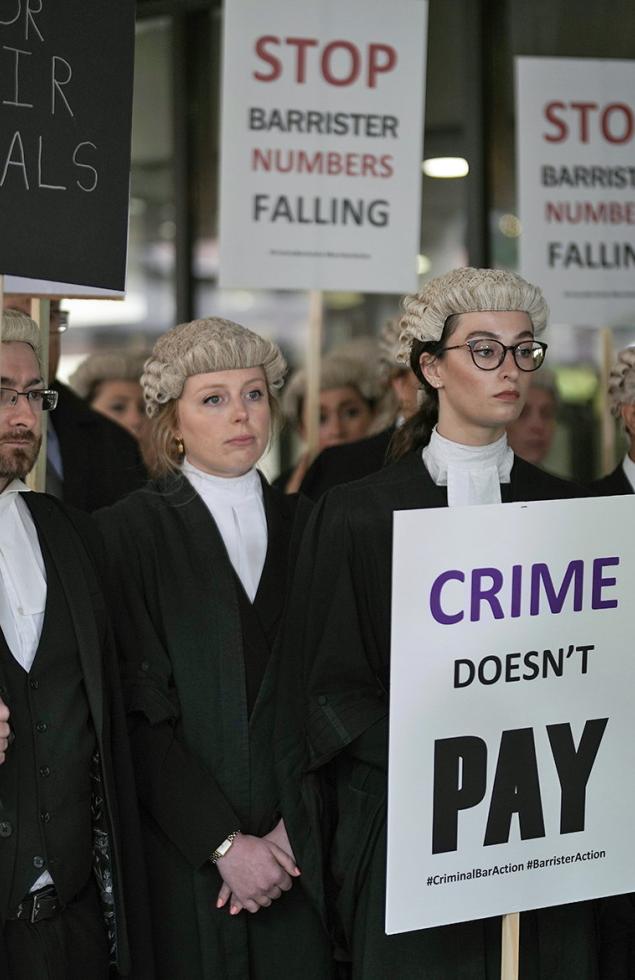
  6. Legal Aid: Opinion: Alberta’s legal aid system is being starved of funding – The Globe and Mail (free version), Starving legal aid is threatening Ontario’s justice system | The Star (free version), Barrister strike: Criminal law is not dying, it’s dead, says barrister – BBC News, Guest Post: Criminal barristers need the patience of monks but we have not taken vows of poverty – BarristerBlogger.
  7. Misc.: Green-lighting torture in Israel: A tragic, unifying court decision – The Jerusalem Post (jpost.com), The Credibility and Reliability of Memory at Trial (thelighthouseproject.ca), Cancel Culture – by Amna Khalid and Jeffrey Aaron Snyder (substack.com), Manitoba lawyers react to call for reverse onus bail changes for knife crimes – The Lawyer’s Daily (thelawyersdaily.ca), Uju Anya on Her Tweet About Queen Elizabeth II (thecut.com), Johnson v Hutchinson: Federal Judges Make Very Bad Amateur Scientists (ballsandstrikes.org), Domestic violence gravy train – Bettina Arndt (substack.com), Benjamin Mendy found not guilty of one count of rape – BBC News, Chief Justice John Roberts defends Supreme Court’s legitimacy | CNN Politics, The Victim Who Became the Accused | The New Yorker, Brooklyn Prosecutors Seek to Throw Out Scores of Convictions – The New York Times (nytimes.com).

Weekly criminal law update – September 6, 2022

I continue to look for work, given that Legal Aid Alberta continues to unreasonably refuse to work with me (and I’d boycott them, either way). My strengths are in written, oral and appellate advocacy. If you can use my services, please email me at efrayim@moldofskylaw.ca.

To subscribe to the mailing list (link).

  1. Check out my recent blog posts: Open Letter to Justice Minister Shandro RE: Legal Aid Alberta Funding – Moldofsky Law, Ghomeshi, Guilt and Gullibility – Moldofsky Law, Innocence is not a myth – Shakespeare, wrongful convictions and R v BEM, 2022 ABCA 207 – Moldofsky Law, and The train wreck that is Legal Aid Alberta – Moldofsky Law.
  2. In a concerning case, a youth who had been detained almost 20 years due to a finding of “not criminally responsible” was finally let go: R. v. J.G., 2022 ONCA 622. The overuse of NCR findings continues to be a major problem – see also #1 here.
  3. In a bizarre case, the ONCA grants a Crown appeal of an acquittal and grants a new trial. The trial consisted of video evidence only – what appeared to be a sexual assault due to extreme intoxication: R. v. Tubongbanua, 2022 ONCA 601.
  4. In R v Iwanciw, 2022 ABPC 170, the Crown’s sentencing position of 3 months’ jail “demonstrates a complete lack of understanding of the gravity of the offence” in a criminal harassment case. Applying R v Sidhu, 2022 ABCA 66 (which I dealt with in my first weekly update – #2), Cochard J. applies an 18-month conditional sentence order, with 24-hour house arrest (with exceptions) for the first 12 months.
  5. While a “drafting error” explains why a driving prohibition cannot be imposed for the offence of criminal negligence causing death, a driving prohibition is not available: R. v. Boily, 2022 ONCA 611, para. 43.
  6. A courier for 220 grams of fentanyl and 1 kilogram of cocaine had his sentence reduced from 12 years to 9 years in British Columbia: R v McLean, 2022 MBCA 60 – H/T CanLII Connects. Conviction appeal dismissed.
  7. The More Things Change, the More They Stay the Same: Bail Pending Appeal After R v Oland by Kenneth Grad :: SSRN (briefly noted at #10 last week), “Despite Oland’s clear instruction that the public confidence inquiry should be reserved for exceptional cases, following Oland consideration of public confidence is far from exceptional” – p. 3, and refers to a glaring “widespread misapplication of Oland” – p. 36. I’ve pointed out systemic problems in the area of bail pending appeal countless times now (e.g. 1-3 here, #4 here, #8 here).
  8. A terrific article by Daniel Del Gobbo: “Lighting a Spark, Playing with Fire: Feminism, Emotions, and the Legal” by Daniel Del Gobbo (dal.ca). Deals with carceral state, crime logic, a “neoliberal publicity stunt,” etc. Also on CanLII. See also Ryan Clements’ monthly roundup for August.
  9. Prof. Tanovich’s latest article: A Principled Approach to Assessing the Absence of Motive to Lie in Sexual Assault Cases | CanLII. He appears to suggest that an absence of evidence of motive to fabricate should be conflated with evidence of no motive to fabricate, which is extremely concerning. He states “the reasonable inference that people do not lie under oath about being sexually violated often times by those close to them without a compelling and obvious motive to lie” which is dangerous and irresponsible (and obliterates the presumption of innocence) on its face. He further claims, “the issue is whether a reasonable inference of no motive to lie can be drawn from all of the circumstances of the case” – a troubling finding, particularly when most peripheral details are deemed “irrelevant” and hence inadmissible at trial. I have concerns that he is competing with Prof. Craig to be the most irresponsible academic in the country when it comes to sexual assault – particularly troubling in Tanovich’s case, as he is otherwise considered an authority on the law of evidence and has argued leading cases at the Supreme Court, including R. v. Golden, 2001 SCC 83.
  10. Legal Aid AB CEO should quit over op-ed, say striking defence lawyers | Edmonton Journal, Legal aid lawyers walk picket line at Calgary courthouse | CTV News, Editorial by legal aid president called ‘vile,’ prompts calls for resignation | CBC News, Alberta defence lawyers walk out of Edmonton, Calgary courts as part of latest job action | Globalnews.ca, Criminal defence lawyers walk out of courts to protest of lack of funding for Legal Aid – LiveWire Calgary, Joanna Hardy-Susskind’s Diary: Wigs on the picket line – New Statesman
  11. The Burden of Proof in Sexual Assault | The New Republic, Robed in secrecy: How judges accused of misconduct can dodge public scrutiny (nbcnews.com), Heck v Humphrey: The Supreme Court Keeps Discovering Exciting New Ways to Ignore Police Misconduct (ballsandstrikes.org), Brisbane cabbie bashed after false rape claim, court told (brisbanetimes.com.au), Why does Canada still allow torture here at home? | The Star, Texas 7 death row inmate Randy Halprin may get new trial | wfaa.com, Cultural war moves to libraries as some groups demand removal of books. : NPR.

Weekly criminal law update – August 31, 2022

I continue to look for work, given that Legal Aid Alberta continues to unreasonably refuse to work with me (and I’d boycott them, either way). My strengths are in written, oral and appellate advocacy. If you can use my services, please email me at efrayim@moldofskylaw.ca.

To subscribe to the mailing list (link).

  1. Check out my recent blog posts: Open Letter to Justice Minister Shandro RE: Legal Aid Alberta Funding – Moldofsky Law, Ghomeshi, Guilt and Gullibility – Moldofsky Law, Innocence is not a myth – Shakespeare, wrongful convictions and R v BEM, 2022 ABCA 207 – Moldofsky Law, and The train wreck that is Legal Aid Alberta – Moldofsky Law.
  2. In a ground-breaking decision, a 2013 conviction is reversed in R. v. Murphy, 2022 ONCA 615. The female accused had not disclosed her HIV-positive status, resulting in an SA conviction – based on the science and law at the time (despite no transmission of the illness; now known to be “zero risk” – para. 5). I’m still trying to wrap my head around Kirkpatrick – not entirely certain this decision is consistent with it. Congrats to Colleen McKeown of Daniel Brown Law in Toronto for her excellent advocacy.
  3. Conviction appeal allowed in R. v. N.P., 2022 ONCA 597. It is a likely “he-said she-said” wrongful conviction (legally and/or factually) overturned on technical W.D. grounds. Bizarrely, the appellant testified that 2 incidents occurred, while the complainant insisted that just 1 occurred. While both suffered from inconsistencies and credibility issues, the judge accepted the accused’s testimony with regard to the number of incidents only.
  4. An apparently ill-advised conviction appeal on tenuous grounds of ineffective assistance of counsel dismissed in R. v. Sagos, 2022 ONCA 603. Includes the following nugget (para. 30):

    Trial lawyers are required to act with reasonable skill, knowledge and ability in the representation of their clients. Lawyers must often make difficult judgments in the course of litigation. The exercise of that judgment is not measured with the benefit of hindsight, or by speculation about what reasonably might have been done differently. For example, cross-examination does not fall below the competence standard because other questions could reasonably have been asked of the witness. There are many ways to cross-examine a witness. Some are better than others. None necessarily demonstrate professional incompetence.

  5. In a courageous and proper acquittal, Mandziuk J. acquits the accused of the charge of sexual assault where there are significant inconsistencies with the evidence of both the complainant and the accused – particularly the complainant’s perjury testimony that she was not intoxicated or on drugs during the incident: R v Howe, 2022 ABQB 580.
  6. Crown self-defence acquittal appeal dismissed – that victim hid gun in pocket after being shot is not an unreasonable inference: R. v. Sparks-MacKinnon, 2022 ONCA 617.
  7. In a thorough sentencing decision (citing some 75 cases), Mandziuk J. sentences an offender to 10.5 years of jail total for extortion, confinement, sexual assault, harassment, etc. : R v HPM, 2022 ABQB 584.
  8. In R v J.M., 2022 ABPC 173, numerous inconsistencies and post-incident conduct (hiding in closet from police) establish the accused’s guilt, per Cummings J.
  9. Briefly weighing in on The Hon. Justice Michele O’Bonsawin’s recent appointment to the Supreme Court of Canada: I am excited generally, although there may have been a “political” element to the appointment. While her PhD thesis has been withheld, I don’t see her as having anything to lose by making it available now that she’s been appointed.
  10. Canadian Bar Association – CBA Alberta statement on calls for increased funding for Legal Aid Alberta (cba-alberta.org), Eric Morain : écoeuré par le système judiciaire, l’avocat pénaliste jette l’éponge | CNEWS, Community editorial board: We need more lawyers in Cornwall, SDG, and Akwesasne | The County Weekly News, La. man wrongfully convicted of rape at 17 exonerated decades later (usatoday.com), Man convicted in fatal 1997 New Orleans shooting freed | News | nola.com, Black pastor in Alabama says he was wrongfully arrested while watering flowers : NPR, The More Things Change, the More They Stay the Same: Bail Pending Appeal After R v Oland by Kenneth Grad :: SSRN, https://duncankennedy.net/documents/Photo articles/Legal Education and the Reproduction of Hierarchy_J. Leg. Ed..pdf (1982), “Stay Wrong”: When State Supreme Courts Fought Back | Balls and Strikes, Makaela Bacon: woman who faked rape fronts court | news.com.au — Australia’s leading news site, They wanted justice for their mentally ill loved one who died in jail. Now those hopes are crushed | CBC News.

Weekly criminal law update – August 23, 2022

I continue to look for work, given that Legal Aid Alberta continues to unreasonably refuse to work with me (and I’d boycott them, either way). My strengths are in written, oral and appellate advocacy. If you can use my services, please email me at efrayim@moldofskylaw.ca.

To subscribe to the mailing list (link).

  1. Check out my recent blog posts: Open Letter to Justice Minister Shandro RE: Legal Aid Alberta Funding – Moldofsky Law, Ghomeshi, Guilt and Gullibility – Moldofsky Law, Innocence is not a myth – Shakespeare, wrongful convictions and R v BEM, 2022 ABCA 207 – Moldofsky Law, and The train wreck that is Legal Aid Alberta – Moldofsky Law.
  2. Confession made to a therapist confidential and should not have been used in criminal proceedings. Child SA conviction overturned as a result by a 2-1 majority of the Quebec Court of Appeal – expect the Crown to appeal further, unfortunately: Chatillon c. R., 2022 QCCA 1072 (Lawyer’s Daily). Trial voir dire here.
  3. In R. v. Bhadresa, 2022 ONSC 4691, a conviction appeal is granted by Harris J. on the ground that the trial judge improperly relied on complainant’s “after-the-fact emotional state” as corroborative of her testimony (para. 4). The police officer found her “frantic and crying” in the park after a domestic incident. While “after-the-fact conduct” can be used, “Like any circumstantial evidence, the relationship between a proved fact (the emotional state) and the fact in issue (the assault) must be scrutinized” (para. 21). As both sides testified that they had a major disagreement, her emotional upset was as consistent with the accused’s innocence as his guilt. Trial judges (and Crowns) need to be much more careful when trying to make this type of argument (particularly in Ontario). See also R. v. Lakhan, 2022 ONCJ 362, at paras. 51-57. Also, I note that the accused’s lack of concern for her safety was used against him (problematic generally due to impermissible bad character evidence, although commonly used in this context; although in this case he claimed to be concerned about her, so less problematic here than usual) – para. 15.
  4. First degree murder conviction overturned where trial judge erred by leaving the conviction open to the jury since s. 231(5) of the Criminal Code was improperly relied upon – the forcible confinement occurred before the murder – not concurrently, as required. Further, evidence of provocation which was culturally specific was allowed, although found to not meet the test on the facts (para. 84): R. v. Singh, 2022 ONCA 584 (Lawyer’s Daily, also).
  5. In an interesting acquittal, the accused is acquitted of the offence of obtaining sexual services for consideration from person under 18 years, given that he claimed to not see the message clarifying the age of the undercover officer posing online as the youth. His further claim to have told the undercover officer that he would only see an adult – contradicted by the officer – appears to have been accepted (following a change of counsel rectifying what otherwise would have been a Browne v. Dunn issue). Entrapment was not an issue, as the accused initiated the conversation. The accused was acquitted of 286.1(2), but convicted of the lesser, included offence – it is an offence as against an adult, too s. 286.1(1): R V A.N., 2022 ABPC 175. Also, note that the accused’s initials were used – likely a kind gesture by trial judge (Lamoureux J.).
  6. A fact-based SA acquittal in R. v. Valiquette, 2022 ONSC 4530. At paras. 58-59, Ellies J. concludes (see also R. v. Khan, 2022 NSSC 223 and R.v. Boujaoude, 2022 QCCQ 5383):

    For the reasons expressed above, I do not fully accept the evidence of either the complainant or the accused about the events of the night in question. Nonetheless, when considered in the context of the evidence as a whole, the evidence of the accused leaves me with a reasonable doubt about whether he struck the blow alleged by the complainant and whether she consented to the sexual acts in which they engaged thereafter.
    Because the Crown must prove beyond a reasonable doubt that the complainant did not consent, the accused must be found not guilty.

  1. Argument of ineffective assistance of trial counsel on multiple grounds (accused’s decision not to testify, reliance on myths, etc.) properly denied in R v Mazhari-Ravesh, 2022 MBCA 63. H/T Ryan Clements.
  2. In R. v. Ellis, 2022 BCCA 278 (Lawyer’s Daily), an 18-36 months’ jail sentencing range in BC (5-year “starting point” in Alberta, which is supposedly the same thing as a range – R. v. Parranto2021 SCC 46, para. 18) is entirely ignored and probation appropriate instead because accused an addict (and female) who pled guilty. Original sentence largely upheld on appeal, although probation term extended. Will be interesting to see if Crown appeals and forces SCC to reconcile conflicting sentencing jurisprudence – cases like this and Sharma (which is forthcoming at the SCC) with its hardline approach in Friesen (child sexual assault) and to a lesser degree, Parranto (high-level trafficking). The SCC – decidedly non-“woke” when it comes to sentencing sexual offenders (unless locking ‘em up and throwing away the key counts as “woke” these days, which it probably does) – will need to determine how “woke” to be when sentencing vulnerable addicts. Mental gymnastics – my favourite.
  3. A conflict of interest is found given that previous defence counsel on the matter recently joined the Hamilton Crown office. This despite the fact that it was clear that said “reputable” counsel had not discussed the file inappropriately with anyone, as justice needs to “be seen to be done” (para. 12). The Crown office’s “reactionary” approach of not having systems in place to deal with said conflicts until the issue was raised by current defence counsel unacceptable (para. 14). Consequently, the Hamilton Crown was required to pass the matter to a different office: R. v. Skye-Davis, 2022 ONCJ 378.
  4. Defence lawyers to refuse serious crime files over Legal Aid Alberta funding | CBC News, Barristers back strike that ‘will bring wheels of justice to a halt’ | News | The Times, Mitch McConnell greatly damaged US democracy with quiet, chess-like moves | Gary Gerstle | The Guardian, Justice Department investigating Arkansas officers’ use of force in arrest caught on video (msn.com).
  5. Judges who sent kids to for-profit jails ordered to pay $200M (msn.com), Steven Avery files another appeal of his murder conviction in Manitowoc County killing of Teresa Halbach (yahoo.com), The Hosts of ‘5-4’ Never Trusted the Supreme Court – The New York Times (nytimes.com), What Happened to Joe Nathan James? – The Atlantic, How Dan Price’s Social Media Fame Fueled Abuse Allegations – The New York Times (nytimes.com).

Weekly criminal law update – August 16, 2022

I continue to look for work, given that Legal Aid Alberta continues to unreasonably refuse to work with me. My strengths are in written, oral and appellate advocacy. If you can use my services, please email me at efrayim@moldofskylaw.ca.

To subscribe to the mailing list (link).

  1. Convictions overturned and new trial ordered where trial judge may have relied on impermissible hearsay evidence in arriving at drug trafficking convictions (paras. 31, 35: R. v. Burgess, 2022 ONCA 577).
  2. Video statement to police by complainant (hearsay) admitted into trial evidence despite complainant not attending trial. While I don’t necessarily quarrel with the holding (para. 93, R v. JNB, 2022 ABPC 169), I don’t like the language in para. 83 (emphasis added): “when considering the context of AG’s non-appearance despite the service of the subpoena, the most cogent explanation for her non-attendance must be that she was left with no confidence that her complaint would be taken seriously by the Court, or that she was fearful of coming to Court, and that she – like many domestic violence complainants – was conflicted about participating in the prosecution.”
  3. In another hearsay case, a conviction appeal was dismissed in R v Love, 2022 ABCA 269. The accused’s out-of-court statements were admissible, and the search warrant based on local court orders to Facebook – an American corporation – was admissible.
  4. In R v Badu, 2022 ABCA 267, a trial judge’s admission of a Charter-incompliant search was overturned. A search warrant for drugs required eight hours to have elapsed from delivery and/or an alarm to have been triggered, neither of which occurred. Although the evidence would have later been “discoverable” (para. ), this was insufficient, as it does “not always lessen the seriousness of a Charter breach” (para. 28). Further, there was a right to counsel (s. 10 – para. 68) Charter breach – a 7-hour delay while completing the search (para. 7). Wakeling JA gives partly concurring reasons (paras. 86-214). Trial counsel is the same as appeal counsel – which I think is generally a good idea, despite conventional “wisdom” otherwise.
  5. In a basement brawl between neighbours resulting in a lost eye for the complainant, Barley J. properly acquits the accused, given uncertainty as to what occurred and the possibility of self-defence. Further, the accused’s calling 2 “character witnesses: was acceptable: R v Danard, 2022 ABPC 164, at para. 24. It was uncertain who “started the fight” – para. 25. Further, the accused testified to delivering only one punch – uncertain whether self-defence would have been accepted had he admitted to more (para. 39).
  6. Twitter thread regarding juries, “Function Over Form: Reviving the Criminal jury’s Historical Role as a Sentencing Body” by Chris Kemmitt (umich.edu), Don’t Let Judges Lie to Juries about Conscientious Acquittal | Cato at Liberty Blog.
  7. Press releases by CTLA/CDLA etc. re: Legal Aid Alberta roster lawyer strike, Aug. 11: “If Minister Shandro and [Legal Aid Alberta] CEO Panusa continue to bury their heads in the sand, our members will continue to withdraw legal services.” Mr. Savage (president of CDLA) said: ““We are not working for 10 cents on the dollar anymore and our clients deserve better. We want to be comfortable and provide proper service just like any prosecutor or judge does,” he said. “Legal aid in Alberta has been chronically underfunded for years, if not decades, and now the chickens are coming home to roost.” – Alberta defence counsel begin withdrawing services as part of legal aid protest – The Lawyer’s Daily (thelawyersdaily.ca), Alberta legal aid lawyers extend job action and threaten more over compensation, funding | CTV News, Legal aid lawyers expand job action after ‘dismissive’ meeting with justice minister | Edmonton Journal, Letter to AG Shandro from ACJ-AJJ (AB Legal Aid – Final) 11 Aug 22.pdf – Google Drive.
  8. Check out my recent blog posts: Open Letter to Justice Minister Shandro RE: Legal Aid Alberta Funding – Moldofsky Law, Ghomeshi, Guilt and Gullibility – Moldofsky Law, Innocence is not a myth – Shakespeare, wrongful convictions and R v BEM, 2022 ABCA 207 – Moldofsky Law, and The train wreck that is Legal Aid Alberta – Moldofsky Law.

Weekly criminal law update – August 10, 2022

I continue to look for work, given that Legal Aid Alberta continues to unreasonably refuse to work with me. My strengths are in written, oral and appellate advocacy. If you can use my services, please email me at efrayim@moldofskylaw.ca.

To subscribe to the mailing list (link).

  1. Check out my recent blog posts: Open Letter to Justice Minister Shandro RE: Legal Aid Alberta Funding – Moldofsky Law, Ghomeshi, Guilt and Gullibility – Moldofsky Law, Innocence is not a myth – Shakespeare, wrongful convictions and R v BEM, 2022 ABCA 207 – Moldofsky Law, and The train wreck that is Legal Aid Alberta – Moldofsky Law.
  2. Leave granted in R. v. Kruk, 2022 BCCA 18 for Crown appeal (SCC file).
  3. Appeal of a first-degree murder conviction successful: insufficient evidence for the judge to put that charge to the jury (presumably second degree would have been fine) – para. 69. Also, a finding of ineffective assistance of trial counsel for calling an expert who apparently put prejudicial evidence in his report (para. 218): R. v. Ally, 2022 ONCA 558
  4. Courageous and proper SA acquittal on the facts by Clackson J. in R v JPB, 2022 ABQB 523.
  5. A proposed surety need not reside in Ontario or have property in Ontario to be acceptable as contrary authority not followed. (R. v. S.T. 2022 ONCA 443 – QuickLaw/Google). H/T Alan Gold.
  6. Also noted in Alan Gold’s QuickLaw NetLetter recently, bail is revoked following conviction, analogizing bail pending appeal: R. v. AMB, 2022 NSSC 203. Rosinski J. at para. 14: “however, in my opinion, for offences where significant terms of imprisonment are a realistic prospect, I would expect that it will be only exceptionally the case that […] curtailment of an offenders’ liberty would not be appropriate.” Not a good precedent, and not necessarily accurate, either.
  7. On an appeal with Alan Gold’s name on it (can you tell that I’m a fan?), a conviction for criminal negligence causing death (but not for failing to provide necessaries of life) is overturned, with an acquittal substituted. A police officer is charged with failing to provide medical care to the victim who was dealing with an overdose – the officer claimed to not be aware of the extent of the danger: R. v. Doering, 2022 ONCA 559.
  8. Gun seized from Edmonton Police officer’s home closet (it was not supposed to be there). The officer’s wife consent for police to search the closet was insufficient, and the warrantless search was invalid (para. 15). However, it was allowed, pursuant to 117.02(1) of the Criminal Code. Further, there was an acquittal on the assault charge, as (para. 32, R v Robinz, 2022 ABPC 159):

    Ms. Miller was less than candid about her drinking problem. She did admit in cross-examination that she is a heavy drinker but stopped short of admitting that she is an alcoholic. A particular example of her lack of candor was her assertion that she had had but one glass of wine before going to see Cst. Turcot, despite that officer’s evidence that she was intoxicated and had slurred speech. Against that background, the Defendant’s allegation that she was drunk when the alleged assault occurred must not be summarily dismissed.  It was equally concerning that she admitted on cross-examination, when confronted with her statement to the police, that she could have grabbed him that night and that it was possible that she did pursue him. At one point she said, “I don’t remember what I did.”

  9. Ryan Clements’ July roundup here.
  10. Legal Aid Alberta lawyers stage work stoppage to protest underfunding | CTV News, Professor Scores Legal Win in Holding Prosecutors Accountable – News @ Northeastern, Not Wearing a Condom Can Now Be a Form of ‘Sexual Violence’ (thelighthouseproject.ca), I spent 14 years in solitary confinement. Here’s why we should end the practice. | Opinion (inquirer.com), My friend Clayton Ruby was one of the good few: Leah McLaren | The Star.
  11. Pro-Death Penalty Legislators Demand Hearing on Richard Glossip’s Execution (newsweek.com), Inmate abuse claims at a St. Louis jail are horrific, but not unique (grid.news), Mothers of the Accused – by Sean Bw Parker (substack.com), Prison Money Diaries: What People Really Make (and Spend) Behind Bars | The Marshall Project, Two wrongful-arrest cases show suspicion is not enough in our system of justice – Iowa Capital Dispatch, Warning graphic content: Video released in Hamilton police gas station assault | TheSpec.com, From the schoolyard to the bench: Bullying in legal profession – The Lawyer’s Daily (thelawyersdaily.ca).

Open Letter to Justice Minister Shandro RE: Legal Aid Alberta Funding

This is a copy of the letter I sent to Alberta Justice Minister this morning:

August 3, 2022

Via Email to: ministryofjustice@gov.ab.ca  

The Honourable Minister Tyler Shandro

Minister of Justice and Solicitor General & Deputy House Leader

204 Legislature Building

10800 – 97 Avenue

Edmonton, AB

T5K 2B6

Dear Sir:

RE:     Inadequate Legal Aid Budget has Roster Counsel at Breaking Point              

Criminal defence lawyers in Alberta continue to work incredibly hard for their indigent, highly-vulnerable clients and to maintain a struggling criminal justice system. They do this despite inexcusable underfunding by both your government of the Legal Aid Alberta (LAA) system over the last few years, as well as inexcusable conduct by LAA to minimize funding it provides to its roster counsel by refusing coverage and challenging invoices at every opportunity (note the CTLA’s comment that LAA engages in a “smoke and mirrors approach to cover up for the fact that they have been given insufficient funding to work with” – CTLA letter, dated July 15, 20220, p. 4 – press release).

While it is difficult to calculate the amount of money owed by LAA to its roster lawyers, it is straightforward to calculate the amount by which your government has underfunded LAA – and by extension, its roster lawyers – over the past few years.

Provincial government funding of LAA steadily increased from 2016 through 2019 (by 57%), and was then drastically cut by 35% through 2021, and slightly increased for 2022 to return back to 2018 levels. The 2022 amount was basically the same as 2017, which is inexcusable to say the least (particularly given the inflation rate of 17% since 2017).

Per the CTLA’s letter to you, emphasis added (p. 4 – and the CBC’s article dated Oct. 11, 2018), “In 2018 the NDP government added $14.8 million to the LAA budget, which was used to cover shortfalls for the 2018 year. The NDP committed to a further $17.5 million for 2019-2020, $16.6 million for 2020-2021 and $21.2 million for 2021-2022.”

The CDLA interprets that generously as a further $17.5 million for 2019-20 exclusive of the $14.8 million added to the year ending 2019 and onwards. While the CDLA’s numbers are somewhat inaccurate (p. 3), they tell a story of $54.6 million underfunded through 2022:

Year Promised Delivered Arrears
2018-2019 $104.1M $104.1M Nil
2020-2021 $105.9M $91.8M $14.1M
2021-2022 $110.4M $69.9M $40.5M

The corrected version should read as follows:

Year Promised Delivered Arrears
2018-2019 $104.1M $104.1M Nil
20-21 (19-20) $107M $91.8M $15M
21-20 (20-21) $105.9M $69.9M $36M
21-22 $110.4M $82.3M $28M
Total     $79M

That’s an additional $25 million unaccounted for in the CDLA’s numbers.

Be that as it may, it is unclear why the numbers should be read as generously as the CDLA does. A simple reading of “a further $17.5 million for 2019-20” is inclusive of the $14.8 million added to the year ending 2019 and onwards. As such, the correct numbers should read [extremely difficult to paste chart here]:


As you can see, the total shortfall (or arrears) owed by your government to LAA is a whopping $174 million (and counting) over the last 3 years alone. At best, reading as generously as the CDLA, the shortfall should be $79 million.

It is unclear to me why this massive shortfall has hitherto been unaddressed by LAA, CTLA, CDLA, etc.

As I pointed out in my latest weekly criminal law update (#1):

Finally, Alberta’s criminal defence lawyers are mobilizing to address the $174 million funding shortfall from the provincial government to Legal Aid Alberta over the last 4 years: Alberta legal aid lawyers threaten job action over ‘funding neglect’ | Edmonton Journal (also Calgary Herald, CBC, Calgary Sun). Correct numbers here (spreadsheet).

I have also blogged about my concerns previously: The train wreck that is Legal Aid Alberta – Moldofsky Law.

I will not get into further detail, such as LAA’s roster spend decreased 16% from 2017 to 2022, while its internal spend increased 26% over that time period. The numbers speak for themselves, and are appalling.

I have reviewed your letter addressed to Mr. Savage, CDLA president, dated Aug. 2, 2022, stating that you are open to eventually consider increasing LAA’s budget, and that, among other things:

Access to justice is essential for Albertans. I encourage you to work with Legal Aid Alberta on their administrative review of the current tariff system. I am confident Legal Aid Alberta’s work on modernizing the tariff system will create many administrative efficiencies increasing accountability, sustainability, and transparency of our legal aid plan.

With the greatest respect, we do not need your platitudes. Nor do we need to “modernize” any LAA tariff system. What we need is for your government to honour its unmet commitment of $174 million over the last 3 years. I technically write only for myself, although I suspect many other defence counsel in Alberta share my views. I am gratified that CTLA, CDLA and other organizations are banding together to send a strong message to your office.

As the CDLA pointed out (p. 8 of its letter), the CBA reported that every dollar spent on Legal Aid returns $6 of public funds saved elsewhere (p. 2, CBA Backgrounder).

Solidarity from LAMDA and WiCCD is appreciated:

Defence counsel work tirelessly to safeguard the rights of some of Alberta’s most marginalized and vulnerable people. They provide skilled and necessary assistance in every corner of the province. They have done so in spite of rates that are a fraction of what Legal Aid organizations in other provinces pay, and with allocated hours, which mean they do much of their work for free.

I eagerly await prompt, public statements of solidarity with the defence lawyers of Alberta from the following organizations (not a complete list):

  1. All levels of Court in Alberta
  2. Criminal Lawyers’ Association (Ontario)
  3. Alberta Crown Attorneys’ Association
  4. Canadian Bar Association – Alberta branch
  5. Legal Aid Alberta
  6. Law Society of Alberta
  7. Calgary Bar Association

I trust the above to be satisfactory and ask that you please contact me directly with any questions.

Yours truly,

Moldofsky Law

Efrayim Moldofsky

Barrister and Solicitor

Weekly criminal law update – August 2, 2022

My apologies for missing last week’s update (my first week missed in 5 months). I was dealing with some personal matters.

I continue to look for contract or freelance work, given that Legal Aid Alberta continues to unreasonably refuse to work with me. My strengths are in written, oral and appellate advocacy. If you can use my services, please email me at efrayim@moldofskylaw.ca.

To subscribe to the mailing list (link).

  1. Finally, Alberta’s criminal defence lawyers are mobilizing to address the $174 million funding shortfall from the provincial government to Legal Aid Alberta over the last 4 years: Alberta legal aid lawyers threaten job action over ‘funding neglect’ | Edmonton Journal (also Calgary Herald, CBC, Calgary Sun). Correct numbers here (spreadsheet).
  2. In a 164-page decision, the SCC extended its Crown winning streak on SA cases to 36: R. v. Kirkpatrick, 2022 SCC 33. In that case, sexual consent was contingent on the use of a condom. As the accused did not comply with this requirement on one incident of otherwise-consensual sex, he was charged with sexual assault, and his convictions were upheld. However, condom sabotage (as opposed to not wearing one altogether) is dealt with under fraud, per R. v. Hutchinson2014 SCC 19, which strains credulity. Conducting this analysis under the mens rea element of the assault (rather than under the separate offence of fraud or mischief) appears to be problematic in that it “opens the floodgates” to liability on other types of fraud (e.g. lying about being on birth control). See the excellent 51-tweet thread by Prof. Sankoff on this. The SCC engages in typical, embarrassing sloganeering and rhetoric with “because “[t]oday, not only does no mean no, but only yes means yes”” (at para. 52) – somewhat indicative of the degree of analysis underpinning its decisions generally. The concurring reasons (4-5) are somewhat more intellectually honest, finding that Hutchinson governs, and deals with it under fraud (thus arriving at the same result that the acquittal was untenable and a new trial was required).
  3. The SCC rules, by a narrow 5-4 margin, that evidence (a confession) obtained with significant Charter violations of the accused’s right to counsel should be excluded: R. v. Lafrance, 2022 SCC 32. Despite officers’ telling the accused he was “free to leave,” a reasonable person might conclude that he was not free to leave. Notably, the factors of youth and race also favoured a finding that he was detained, in this circumstance. The dissenting justices agreed with (and were deferential to) the trial judge who found that there was no detention, hence no Charter violation. Further, the dissent found that subsequent confusion on the part of the accused did not require a further right to consult with a lawyer.
  4. In R. v. Sundman, 2022 SCC 31, the SCC unanimously finds that a fleeing victim (who had previously been confined in a truck) is still considered “unlawfully confined” during the escape attempt, with the result that the murder was classified as first-degree. This would appear to be “pretzel” (and/or results-oriented) logic to my unsophisticated mind.
  5. In R. v. Chow, 2022 ONCA 555, the ONCA found that the owner had no reasonable expectation of privacy in his Airbnb home at the relevant time. Decision criticized by Chris Sewrattan here. Hopefully, leave to appeal is sought and granted.
  6. Toronto cop ‘intentionally misled’ court, gun and drug case collapses | The Star. Reasons at R. v. Downes, 2022 ONSC 4308.
  7. Order for accused to sit at counsel table for jury trial on first-degree murder charges, despite Crown opposition: R. v. Douse, 2022 ONSC 3163. Jurisprudence otherwise conflicted. Schreck J. concludes that “In my view, where fair trial rights are involved, it is better to err on the side of caution. As a result, in considering whether an accused should sit at counsel table, it is appropriate to consider that having the accused sit in the dock carries with it a risk of prejudice” (para. 38). Severance application previously granted here.
  8. In R v Rasberry, 2022 ABPC 155, Jivraj J. found that “While I do not think that the Complainant was attempting to deceive the Court, the gaps and inconsistencies in her testimony raise some doubt about the reliability of her evidence” (at para. 46). The obvious perjury of the complainant, however, is made rather clear in the subsequent paragraph. Further, “Examined in isolation, one might be tempted to view these inconsistencies as being inconsequential. However, when looked at as a whole, they are, in my view, sufficient to raise some doubt about the reliability of her evidence” (at para. 48, emphasis added). Further concerning language by the same judge in his reasons for conviction in R v Saddleback, 2020 ABPC 168, where the complainant’s testimony – despite being “a little unsettling,” “concerning,” “troubling” and “questionable;” some of the inconsistencies amounted merely to “minor discrepancies” and were hence “inconsequential” (at paras. 59, 60, 71, 80). The latter conviction was initially challenged in R v Saddleback, 2022 ABCA 27, and was subsequently conceded by the Crown. Similar language by the same judge also in R v Ferraz, 2021 ABPC 166 (QuickLaw/Google Drive). The complainant was a “credible witness” – despite some glaring weaknesses and discrepancies (between her police statement and within the trial) “not all of which can be cast aside as merely “innocuous” or “peripheral”” (emphasis added, para. 97). The accused “came across as credible” (para. 98). At para. 99, emphasis added: “The end result is that the evidence of the accused, viewed in the context of all the other evidence, including that of the complainant, has left me with some doubt that he could be telling the truth.” It is unclear whether it would be as “tempting” to view inconsistencies in the evidence of the accused as generously, notwithstanding the presumption of innocence.
  9. Crown appeal of a CSO for voyeurism charges dismissed in R v Germain, 2022 ABCA 257. The ABCA expressly declines Crown’s invitation “to rule that denunciation and deterrence must be the primary considerations in sentencing for the offence of voyeurism” against adults (para. 69).
  10. Inconsistent jurisprudence with respect to the ability of the Crown to extract driver information from a vehicle after an accident without a warrant is dealt with in R v Major, 2022 SKCA 80. A unanimous SKCA finds that while a warrant “could have been obtained,” it was not required (para. 66). Nevertheless, a new trial was ordered, given that there was no expert evidence with regard to the integrity of the electronic data (paras. 102-3). H/T Ryan Clements.
  11. Thorough 110-page reasons for SA acquittal clearly not good enough for the complainant in R v Ukabam, 2022 SKQB 128, who proceeded to complain about the judge. I can see why some judges are perhaps loath to acquit.
  12. Check out my recent blog posts: Ghomeshi, Guilt and Gullibility – Moldofsky Law, Innocence is not a myth – Shakespeare, wrongful convictions and R v BEM, 2022 ABCA 207 – Moldofsky Law, and The train wreck that is Legal Aid Alberta – Moldofsky Law.
  13. Tamara Lich’s political detention properly overturned on appeal and is also trashed by Ari Goldkind, a rare Canadian lawyer who is prepared to publicly criticize the justice system from a non-“woke” perspective.
  14. Justice warriors in the dock – Bettina Arndt (substack.com), Brighton Uber driver victim of false sexual assault claim | The Argus, 5-4: Brett Kavanaugh – Unlocked Premium Episode on Apple Podcasts, Alberta appeal court sets aside contempt sanctions against pastor, brother and cafe owner | CBC News (reasons here), Not on Record podcast – EP#29 | Tamara Lich & Hockey Canada – YouTube.
  15. The Conservative Agenda Depends On Judges Being Terrible Historians (ballsandstrikes.org), Alito’s speech mocking foreign leaders also offered an offensive vision of religious freedom. (slate.com), Olayemi Olurin – Being Black & Principled in white America (substack.com), Kim Ogg Wants a Democratic Socialist Judge Thrown Off the Bench – Texas Monthly.

Weekly criminal law update – July 20, 2022

To subscribe to the mailing list (link).

  1. Check out my recent blog posts: Ghomeshi, Guilt and Gullibility – Moldofsky Law, Innocence is not a myth – Shakespeare, wrongful convictions and R v BEM, 2022 ABCA 207 – Moldofsky Law, and The train wreck that is Legal Aid Alberta – Moldofsky Law.
  2. A conviction appeal of a “run-of-the-mill garden variety refusal case” is granted on grounds that the accused did not sufficiently understand English to understand her right to counsel, despite some indication of understanding: R v Polusmiak, 2022 PECA 8, at para. 9. H/T Ryan Clements.
  3. The ABCA dismisses a jury SA conviction appeal in R v McKnight, 2022 ABCA 251, where the appellant argued that the trial Crown had used sarcasm and inflammatory language in his cross-examination of the accused (a “poor form of advocacy that is generally discouraged,” per R v Saddleback, 2022 ABCA 27, at para. 5) in a lengthy, 80-page decision. After going through the convictions in extensive detail (paras. 11-116), noting that the appellate Crown conceded that ““[o]n occasion” the Crown “strayed into improper questioning” (para. 125), the Court somehow finds that the Crown’s inappropriate and sarcastic question was somewhat justified given the context (paras. 132-4). Further improper Crown “rhetoric” is “beneath the dignity of the Crown, and not to be emulated,” yet it surprisingly “does not rise to the level of impropriety that fair trial interests have been compromised” (para. 140). The appeal Crown’s irrelevant argument that two wrongs somehow make a right (as argued at para. 18 in R v BEM, 2022 ABCA 236) is enthusiastically accepted (defence counsel also used unacceptable language – para. 141). The Crown asking the accused to explain why 13 women brought complaints against him was improper, yet “ameliorated” by the trial judge’s instruction to the jury (para. 152). The question about whether one aspect of a complainant’s testimony was true was “dangerous” (para. 156). Further, references to the accused’s access to disclosure in suggesting that he tailored his evidence to match it is also improper (paras. 177-8), yet not enough as it is somehow “peripheral” to the conviction (para. 190 – duh!). Another excellent effort by Prof. Sankoff.
  4. In contrast, the ABCA grants a Crown acquittal appeal in R v Hay, 2022 ABCA 246. There was not clear evidence of consent to specific acts, despite some history of consent in the past. The ABCA’s conclusion appears to be problematic – particularly on the evidence of the accused, who testified that there was no verbal communication about acceptable acts (trial decision, para. 29). Even more problematically, it finds that the trial judge’s admission of previous sexual history violated twin myths, and that “notably absent was any evidence that Mr Hay believed the complainant had communicated consent to this specific act” (para. 19), which is not entirely accurate, particularly noting concerns with the complainant’s credibility (trial decision, paras. 91-92). The trial judge aptly observed that “mixed signals based on popular culture, where one man’s embrace of a mute woman could be perceived as either the height of passion or the moment of assault” (quoted at para. 41) in finding an honest but mistaken belief in consent. A verdict of guilty was substituted.
  5. In R v Wilde, 2022 SKCA 74, a trial judge’s insufficient assistance of self-represented accused at trial required a new trial, particularly given that the trial judge improperly shut down a line of questioning for the accused where he was trying to impeach a witness with a prior inconsistent statement (paras. 39-40). Further, the trial judge appeared to be “supplementing the Crown’s case and thereby appearing as though he was acting as an advocate for it” through excessive questioning of a witness, which was also improper (para. 55).
  6. A trial judge’s “implicit finding” of no Charter breach for officers’ ridiculing a same-sex accused was incorrect, but no stay of proceedings was necessary, as it was not “the clearest of cases”: R v Z (MJ), 2022 MBCA 61, at paras. 4-5.
  7. Crown appeal of Charter stay of proceedings on grounds that there was insufficient evidence of the accused having driven within the past 3 hours on an impaired charge dismissed, despite the circumstantial evidence being highly suggestive of such: R. v. Abdullah, 2022 ONSC 4119, at para. 8.
  8. See Shireen Bangash’s excellent article on problems with bail pending appeal in Prof. Sankoff’s latest Golden Thread. On that note, as if entirely forgetting her own comments about the extreme rarity of the public interest (3rd ground) test on appeal bail in Bobrosky, Veldhuis JA denies appeal bail on a 4-year sentence on this ground alone, where the grounds of appeal are “quite slim” yet not frivolous: R v Bennetts, 2022 ABCA 245, at para. 6.
  9. Domestic charges are stayed where it appeared police officers were communicating by text message while testifying throughout a Zoom trial. The Crown is specifically lambasted by Justice Chamberlain for its “complete inaction” in failing to provide copies of the impugned text messages to the Court: R. v. Attayee, 2022 ONCJ 315, at para. 35.
  10. Excellent acquittal on an SA charge by Shoyele J. of Edmonton. Both the complainant’s and accused’s testimony suffered from serious inconsistencies. Further, the complainant had a criminal record for major fraud. Shoyele J. properly had no patience for the Crown’s failure to tender evidence of deleted text messages that may have been very helpful to the Court: R v JWB, 2022 ABPC 151, at paras. 105-109:

    Obviously, evidence of these picture(s) or other messages could have been produced to assist the Court in its truth-seeking role. These pieces of evidence could have provided a clearer picture of the circumstantial relationship and communication between the Complainant and the Accused that preceded the alleged sexual assault, for the purpose of a robust contextual credibility analysis. For instance, although the Crown argued that the exchange of text messages by the Accused and the Complainant were not “flirtatious,” the Crown failed to produce any form of evidence to counter the suggestion by the Defence that the Complainant sent a “vagina picture” to the Accused.
    Notwithstanding the Crown’s potential ability to retrieve the deleted picture(s) or other messages from the relevant service provider, there is no evidence before me that such a recovery effort was pursued with the requisite tenacity.
    It is my view that if the Crown wanted this Court to: (i) infer sexual intention, or (ii) the likelihood of a subsequent sexual assault from the Accused’s “sexting” with Complainant, or (iii) alternatively to conclude that there was no flirtation between the two of them, she has the minimum onus of providing evidence of a wholesome transcript or excerpts of the relevant text messages – including the comprehensive contents of the Complainant’s responses – for context.
    Without the background context of these deleted picture(s) and other text messages exchanged between the Accused and the Complainant, this Court faced serious difficulty with objectively determining what actually transpired, and who – out of the two parties – is telling the truth about the preceding circumstances as well as the substance of the alleged sexual assault.
    The Crown’s failure to produce evidence of these retrievable “deleted messages” at trial leads this Court, in part, to conclude that the Crown has failed to meet her onus of proving the Accused’s guilt beyond reasonable doubt.

  11. Further to the discussion of sarcasm in #2 above (McKnight), in Law Society of British Columbia v. Harding, 2022 BCCA 229, the BCCA overturns their Law Society’s finding of a lawyer’s professional misconduct, finding that (paras. 91-95, H/T Ryan Clements):

    Certainly a lawyer’s use of mockery and sarcasm will often be poor advocacy because it can come across as insulting and arrogant, turning the listener against the lawyer, and creating sympathy towards the witness being victimized by the lawyer. But humour and sarcasm have been used by many great trial lawyers and speakers over the course of history to illustrate the weakness of a witness’s evidence or the outrageousness of a position.
    Had the LSBC Panel considered the full context, I am not satisfied that it would have concluded that using sarcasm or humour in a closing address, to suggest a witness’s evidence is ridiculous, is a bright line that can never be crossed. It depends on the context and how it is delivered.
    While it would not be good faith or reasonable for a lawyer to deliberately violate the legal principles applicable to jury addresses, or to deliberately attempt to cause a mistrial; it could be something less than professional misconduct to err in the exercise of judgment as to what is acceptable advocacy and to thereby cause a mistrial.
    To draw upon Groia, it could be disproportionate to lawyers’ freedom of expression, and would undermine the important duty of lawyers to engage in resolute advocacy, if lawyers were penalized professionally for their in-court statements about an opposing party’s expert witness or opposing counsel in a closing address to the jury, where there was a reasonable basis for the statements and they were made in good faith believing them to be within the boundaries of a proper jury address.
    In this case, the LSBC Panel erred in its approach, in that it did not consider whether Mr. Harding made his closing address in good faith, and had a reasonable basis for saying the things he said and believed it to be within the legal boundaries of a proper closing address.

  1. Criminal barristers reveal why they are striking | Metro News

Ghomeshi, Guilt and Gullibility

Given the Supreme Court of Canada’s recent horrendous decision in R. v. J.J., 2022 SCC 28 (extending its half-decade Crown win streak for sex assaults at that Court to 35) that I blog about here and the recent jury verdict in the Jacob Hogaard case (noting the awful, one-sided media coverage of it), I thought I’d post my comments on the Jian Ghomeshi trial from 2016 which directly led to this awful legislation. Justice Moldaver even made very pointed (clueless, to boot) remarks to defence counsel Megan Savard at the JJ hearing criticizing Ms. Henein’s stellar and irreproachable (per Prof. Craig) defence of Ghomeshi (1:53-2:01). Clearly, the naïve and irresponsible government, media, general public and SCC viewed the Ghomeshi acquittals as a gross miscarriage of justice, when they were, in fact, everything but that. Listen to the recent embarrassing, irresponsible and cringe-inducing podcast by Jesse Brown of Canadaland on this, who continues to refuse to admit defeat (and/or his journalistic misconduct) in attempting to destroy Ghomeshi all these years now. I managed to get my hands on the trial transcripts of the Ghomeshi trial, and will review them below.

Since 2 of 3 complainants have a publication ban, I’ll refer to them as Complainants 1 (L.R.  – edit July 18, 2022 – Linda Redgrave, who subsequently waived the publication ban), 2 (Lucy Decoutere), and 3 (S.D.). Let’s deal now with some of those pesky details, shall we?

When confronted with emails largely contradicting her trial version of events, one complainant claimed the email was “bait” to get him to call to get her to explain why he punched her in the head. She didn’t think a “common person” would believe her explanation – y’think? She claimed at trial that she had no romantic feelings toward him after – again, highly contradicted by her emails (no, nothing at all to do with myths or stereotypes). Of course, nowadays, the SCC and Parliament have ensured that lying complainants are less likely to be confronted with their texts/emails that contradict their narrative without a s. 278 application and advance notice of the lies they can expect to have to answer for.

Complainant 1 (L.R.)

Ghomeshi had a bright yellow VW Beetle at the time (p. 45). He kisses her, then grabs her hair “really, really hard.” Later, she goes to his house alone after a taping. He then pulls her hair and punches her “multiple times” in the head – while he’s somehow also pulling her hair (57). Crown asks her why she didn’t run out of house, why she didn’t scream, why she waited so long to report – all arguably myths, technically. She claims that she didn’t report at the time, because of societal “stigma” of reporting sexual assault – star defence counsel Marie Henein properly objects to evidence of “societal stigma” and ends that.

LR never saw him again, but contacted him again. Did not discuss details of her allegations with Complainants 2 and 3.

Cross-examination – excellent. Begins by confirming that she took oath to tell truth both in police statement and at court. LR had reviewed her statement week prior. Her statement to police (13 years after the alleged incident) took a mere 25 minutes – shocking on its own. Police never asked her to show them neighbourhood of residence (or asked about it). Same with not following up on emails she admitted to sending accused. Does not recall officer telling her not to read more about the case.

Accused was smittennot dazzled (later just an “interest”) – with her. Interesting distinction – obviously fibbing/lying. Denies telling her friend she herself was smitten by accused. Fudges on whether she told friend after first incident that she really liked him and wanted to see him again (technically, arguably a myth – many judges/Crown would eagerly jump in to protect complainant at this point these days on grounds of relevance and/or impermissible myths). Almost gets her to admit that she was angry after 2nd meeting that he was not terribly interested in her. And that her third meeting was meant to be romantic between her and accused. Then gets her to admit that she went straight to the car after – not the pub – given that it was a snowstorm.

Then, gets her on the Beetle – it was a GTI. She’s “not a connoisseur of cars.” Told Kevin Donovan of the Toronto Star that Ghomeshi yanked her hair hard. Then tries to backtrack – Kevin Donovan “changed her story” but admits saying accused yanked her hair hard. Her hair was long at the time – “retracts” her email follow-up to police saying she had hair extensions at the time. Doesn’t admit to lying when she said on TV that he pulled her hair right after she got in the car – during direct, she said after kissing. Other inconsistencies noted (head smash allegation retracted, changes story on whether shocked, etc.). Notes that whatever happened in the car, it wasn’t enough to keep her away (myth?).

Told media she never contacted him again after 3rd incident. Confirms this multiple times. Then Henein pulls out stacks of emails she sent him afterwards. Simply glorious. “Good to see you again” and “your show is still great.” Second email with photoshopped photo of herself in a string bikini – downloaded 3 hours prior to sending. Myths – my foot. Maybe she was too “traumatized” to remember how obsessed with him she was?

Another email says she’s been watching him on TV – despite claiming that every time she saw his face she’d be traumatized.

Complainant 2 – Lucy Decoutere

She met Ghomeshi at a Banff event, and flirted with him. She went to Toronto to see him, and he took her to dinner and then back to her house, where he “started kissing me, and then he took me by the throat and he just pushed me against the wall, cutting off my breath, and he slapped me three times” (228 – as revealed in cross-examination, the sequence had previously been very unclear, in her renditions to media and police). She then stayed, to “placate the situation.” Afterwards, they “might have kissed on the sofa,” sitting close together on the sofa, and kissing each other good night, as she didn’t want to “seem frosty” – all of the kissing is added at trial and not previously mentioned to police nor media, as noted by Ms. Henein in cross-examination (she specifically told police that nothing significant had happened after, as she somehow didn’t think this was “consequential”). She didn’t tell anyone about this incident because she wanted to “protect him.” She then spent the weekend with him, and later sent him flowers (also revealed at or during trial).

On cross-examination, she is confronted with photos of her cuddling Ghomeshi in the park, after the alleged assault. She “doesn’t remember” the photos being taken. She didn’t “understand the relevance of after-incident contact,” which Ms. Henein points out is a “very well-rehearsed answer.” Her prior testimony that she had no intention of pressing charges was a lie, as demonstrated by a message she sent, in which she said she wants him “f**king decimated” – despite her further perjury that she has “compassion” for him. She had some “casual” emails after the fact with him, which she realized she should possibly let the Crown know of the day before – after LR was decimated on the stand. She cannot find the emails, though. Thankfully, Ms. Henein has them, and – at that time – was allowed to ambush the Crown’s lying witness with them.

She previously claimed to have lost access to the emails, but subsequently tells police she deleted them. When she is confronted with these “forgotten” emails, it includes post-incident emails she sent to Ghomeshi such as “Sunday, in my brain has a slot all for you. rrrrrrr.” She signs her subsequent email “torn between two lovers.” She wants to “play with him” in Banff. She further emails, “If I don’t get to hang with you while we are in Banff, I’m going to beat the crap out of you.” She sends a photo to him, with the subject “Proof that you can’t live without me.” She further tells him “let me know when you want to hook up. I’m doing stuff, but would happily use you as a procrastination technique” – note, that her lies statements to police and media were that she had no subsequent romantic interest in him. Also, “had a really great dream the other night. You were with me in Toronto.” Among many other “forgotten” emails is one of her “fellating” a bottle. Although she told police his hands terrified her, her letter said she “loved” his hands. Her emails stated “I think you are magic and would love to see you” and she wants to “frolic on the beach” with him. She “wants to f**k his brains out. Tonight.” Sounds very non-romantic to me! Her love letter that she “forgot” about mentions that he was “too sparkling.” And “what on Earth could be better than lying with you, listening to music and having peace. Nothing.”

Complainant 3 (SD)

After this second devastating Crown witness – also destroyed by excellent cross-examination – Ms. Henein informs the Court that it appears SD had been listening to the news – contrary to the Court’s order – and now also had additional information to “disclose.” They then require a last-minute s. 276 application on the basis of this last-minute disclosure. She met Ghomeshi at a music festival at which she was performing. He takes her out to dinner, and she sees him again at the festival, later. They kiss on a bench in the park, and then she “felt his hands on my shoulders and his teeth and then – and then his hands go around my neck and he was squeezing.” That led to “some difficulty breathing,” and he tried to “smother” her. She then gets a cab and goes home, and her mind is a “big blank” as to what else occurred. She later goes out for dinner (again) and to a bar with him, thinking she may have “misread” the situation. Good lord.

The plot thickens. After the bar, there was further “romantic activity” at her home – this was only disclosed at the last minute, of course. She hadn’t thought it was “relevant” to disclose earlier. If it wasn’t Crown misconduct yet for not staying the proceedings to this point (and/or charging all 3 complainants with crimes of perjury), by now it certainly is.

The lies continue. Despite being obviously terrified of him after their original encounter, she later saw him alone at her home romantically because she was – I kid not – “notoriously known for giving people second, third and fourth chances.” She saw him again multiple times afterwards, before she ended her relationship with him.

Kevin Donovan also apparently “lied” – by saying Ghomeshi attacked her, when she had used less aggressive language and claims to have told him that the kissing was initially consensual. She testifies that he “kind of” choked her with both hands, but she had previously told police that she can’t remember if it was with 1 or 2 hands.

Decoutere messaged her that her police statements will be part of a “Jenga tower” – presumably to topple Ghomeshi. She also demonstrably lied under oath (during direct) that she had not discussed her allegations with Decoutere prior to going to police. Her communications with and about other complainants were properly subject to a disclosure request – although I’m sure many Crowns would consider such disclosure “irrelevant” and/or privileged (particularly pertaining to its conversations with complainants).

She is shown to have lied when claiming to have no interest in Ghomeshi (“professionally” and/or personally).

Just to get defence’s hands on disclosure of all of this correspondence, clearly very difficult – even before the idiotic legislation, and especially now. Defence had to go through costly, lengthy, unpredictable third-party disclosure records applications, it appears. SD writes to Decoutere, “They didn’t get into specifics, but for example, if they want our conversation even though the cops have it, they have to put in an application for it, then I, we, would sit with a court appointed lawyer and go over everything and decide what can, cannot be shown. They also said it really depends on how much money he wants to spend. More digging, more money.” It is alarming that most liars can so easily get away with their lies – back then, and especially now. God forbid we allow defence access to any “embarrassing” or “highly personal” communications! Since the presumption of innocence is an absolute joke (or a rape myth) – at best, what could possibly go wrong with this policy?

SD’s very last-minute disclosure of having spent some more time with Ghomeshi and engaging in sex with him, apparently at her place and he spends the night there – clearly blocked from her “traumatized” mind until the very last-minute, coincidentally. Of course, SD insists (with a straight face, apparently) that this minor detail was “irrelevant” – incidentally, likely agreed to by the Crown, SCC and everyone else. She had lied under oath to police previously when she said there was no consensual sexual contact. Only things that “made her feel bad” were relevant, in her view. It was an “omission” and of an “embarrassing” detail (a “misjudgment”), she later claims – and not at all a lie. And things she did not expect to be called out on for lying about, I’d respectfully submit.

Incidentally, it is not too late for the Ontario Attorney General to do its duty and charge all 3 lying complainants with perjury, which was extreme and blatant in this case. Surely, they’ve been busy and have merely overlooked their responsibility and ethical obligations to date on this file. If they refuse to do their duty, individuals should initiate a private prosecution. It is appalling that blatant criminal behaviour is overlooked, excused and encouraged when it comes to Crown witnesses.

R. v. Ghomeshi, 2016 ONCJ 155 is a very fair, reasonable and understated judgment, detailing the (obvious) reasons for the acquittal. Horkins J. points out (gently, I’ll add) with regard to LR that “The impossibility of this memory makes one seriously question, what else might be honestly remembered by her and yet actually be equally wrong?” (para. 36). And “The negative impact that this after-the-fact conduct has on L.R.’s credibility is surpassed by the fact that she never disclosed any of this to the police or to the Crown” (para. 40). LR’s evidence was approached – properly – “with great scepticism” and she “deliberately breached her oath to tell the truth” (paras. 41, 43).

Ms. Decoutere’s further encounters with Ghomeshi, were in her view “inconsequential” (paras. 53, 59) – which reminds me of similarly memorable language at para. 80 of R. v Saddleback, 2020 ABPC 168. Horkins J. finds, correctly, that “It is difficult for me to believe that someone who was choked as part of a sexual assault, would consider kissing sessions with the assailant both before and after the assault not worth mentioning when reporting the matter to the police” (para. 60). Inconsistencies in her narrative of the sequence of events – while generally forgivable (yuck – para. 64), are inexcusable in this instance, due to the “shifting” narrative. In violation of her oath to tell the police the truth, she made the choice to “consciously suppress relevant and material information” which indicates (again – gently) “a failure to take the oath seriously and a wilful carelessness with the truth” on Decoutere’s part (para. 67).

We’re just getting started (paras. 87, 94, 109, 114):

In the framework of a credibility analysis in a criminal trial, Ms. DeCoutere’s attempt to hide this information evidences a manipulative course of conduct. This raises additional and mounting concerns regarding her reliability as a witness. […]

Let me emphasize strongly, it is the suppression of evidence and the deceptions maintained under oath that drive my concerns with the reliability of this witness, not necessarily her undetermined motivations for doing so. It is difficult to have trust in a witness who engages in the selective withholding relevant information. […]

The extreme dedication to bringing down Mr. Ghomeshi is evidenced vividly in the email correspondence between S.D. and Ms. DeCoutere. Between October 29, 2014 and September 2015, S.D. and Ms. DeCoutere exchanged approximately 5,000 messages. While this anger and this animus may simply reflect the legitimate feelings of victims of abuse, it also raises the need for the Court to proceed with caution. Ms. DeCoutere and S.D. considered themselves to be a “team” and the goal was to bring down Mr. Ghomeshi. […]

S.D.’s decision to suppress this information until the last minute, prior to trial, greatly undermines the Court’s confidence in her evidence. In assessing the credibility of a witness, the active suppression of the truth will be as damaging to their reliability as a direct lie under oath.

It gets even better (paras. 118, 119, 121, 135, 137, 138):

I accept Ms. Henein’s characterization of this behaviour. S.D. was clearly “playing chicken” with the justice system. She was prepared to tell half the truth for as long as she thought she might get away with it. Clearly, S.D. was following the proceedings more closely than she cared to admit and she knew that she was about to run head first into the whole truth.

S.D offered an excuse for hiding this information. She said that this was her “first kick at the can”, and that she did not know how “to navigate” this sort of proceeding. “Navigating” this sort of proceeding is really quite simple: tell the truth, the whole truth and nothing but the truth. […]

The primary and overarching principle in every criminal trial is the presumption of innocence. This is the most fundamental principle of our criminal justice system. It is essential to understand that this presumption of innocence is not a favour or charity extended to the accused in this particular case. To be presumed innocent until proven guilty by the evidence presented in a court of law, is the fundamental right of every person accused of criminal conduct. […]

However, the twists and turns of the complainants’ evidence in this trial, illustrate the need to be vigilant in avoiding the equally dangerous false assumption that sexual assault complainants are always truthful. Each individual and each unique factual scenario must be assessed according to their own particular circumstances. […]

Each complainant was confronted with a volume of evidence that was contrary to their prior sworn statements and their evidence in-chief. Each complainant demonstrated, to some degree, a willingness to ignore their oath to tell the truth on more than one occasion. It is this aspect of their evidence that is most troubling to the Court. […]

The success of this prosecution depended entirely on the Court being able to accept each complainant as a sincere, honest and accurate witness. Each complainant was revealed at trial to be lacking in these important attributes. The evidence of each complainant suffered not just from inconsistencies and questionable behaviour, but was tainted by outright deception. [emphasis added]

The consensus among media and legal academics was generally that Horkins J. was wrong – if not in his verdict, than in his stated reasons for it. Joshua Sealy-Harrington (a moderate, I suppose; others would probably call for Horkins’ immediate firing) accuses Horkins J. of making “genuine mistakes.”

Sealy-Harrington says, “In other words, Justice Horkins declines the harder position that these complainants lied about being assaulted and adopts the softer position that, due to their inconsistencies, the veracity of their claims of assault is not beyond reasonable doubt – a reasonable conclusion based on the record before him, and a conclusion that carefully delineates the dishonesty he is actually identifying in his reasons.” Technically, he’s correct – Horkins J. did not call them actual liars about everything (I suppose he wanted to keep his job), but he came pretty darn close to it, actually. Further:

It is undeniable that Justice Horkins’ description of this behaviour as “odd” is rooted in the stereotype that credible sexual assault victims avoid their abuser at all costs after an assault (even though the contrary has been consistently documented in the context of sexual abuse, and even though such an expectation surely imposes absurd expectations on women assaulted by their ongoing partners (see here and here).

No, actually. It has nothing to do with stereotypes; everything to do with lies.

Of course, irresponsible media and legal academics and practitioners fell over themselves in their rush to condemn the acquittals, some using reserved language, like Sealy-Harrington (while most did not). Surprisingly, Prof. Elaine Craig (perhaps the least responsible academic of the self-proclaimed “experts”) did not criticize the judgment in her book, although she was as big a proponent for the atrocious legislation that arose from it as anyone else. If the judge was in Alberta, I assure you there would have been a Crown complaint about him.

Alice Woolley (previously an academic, and now a justice in Alberta – a former professor of mine and actually a decent person) criticized the judgment too. What is consistently and conspicuously absent from all of this “analysis” is the presumption of innocence, which I understand has not yet been classified as a rape myth (not that I should give the SCC and Parliament any more bright ideas). And no, it was not the prosecutors’ fault that the complainants lied through their teeth – what may be their fault is the prosecutors not seeing that sooner and failing to stay the proceedings when they did. Clearly, blaming the prosecutors in this case (or the judge or defence, what have you) is necessary (“Further, it allows the lawyer to help ensure that the witness gets to provide her testimony, and that she will not end up looking like a liar when she is telling the truth”). Bollocks!